Prototyping
Why prototype before you invest
Every product idea comes with a few open questions. Will the part hold? Will the battery last? Will people understand how to use it? You'll find the answers either way. What a prototype decides is when you find them, and how much it costs to act on them.
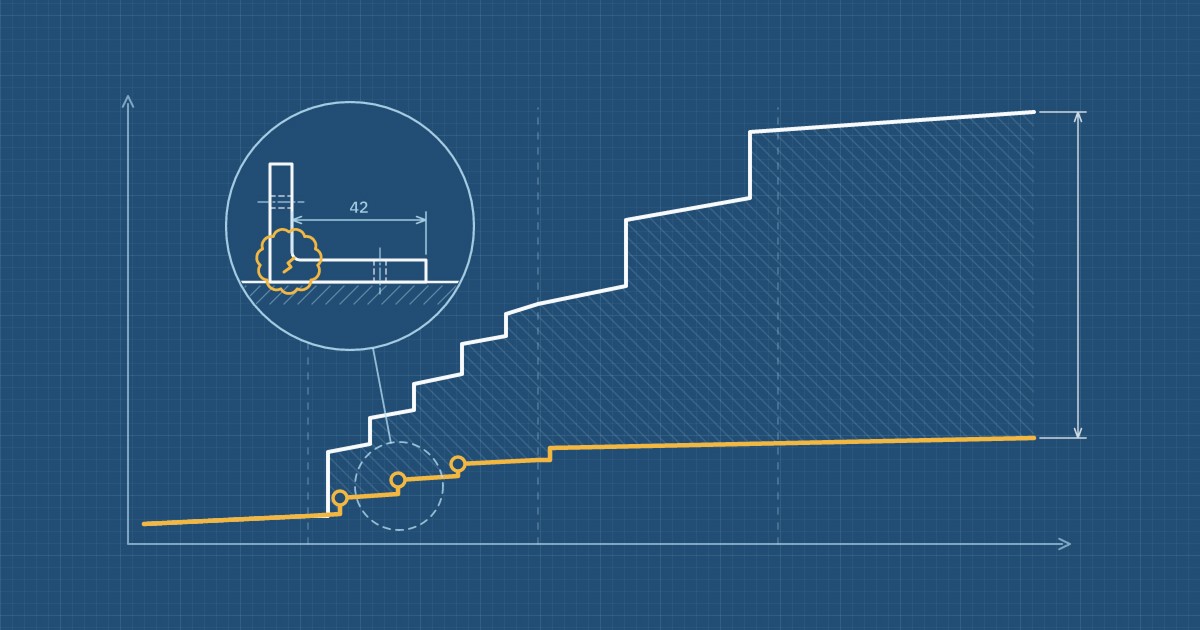
Every change costs more the later it's made
#Early on, changing your mind is cheap. A different shape means a new sketch. A different approach to the electronics means a few hours of redesign. Nothing has been ordered, and nothing has been made.
Later, the same change is a much bigger job. Once the circuit boards are ordered, a fix means a new board revision. Once the production tooling is made, it means modifying the tooling or starting over. Once the product is out, it can mean updates, returns or, at worst, a recall.
There's a second cost that's easy to miss: the know-how to make the change. If you don't already have people who work across electronics, mechanics, software and simulation, you pay to build that up first, with hires, equipment and a lot of learning along the way.
Prototyping doesn't make problems go away. It moves them to the point where they're cheapest to fix.
A prototype answers a question
#A prototype isn't a rough, scaled-down copy of the finished product. It's a way to answer a specific question, and the best place to start is the riskiest one: the part of the idea that decides whether the rest is worth doing.
That's why prototypes come in very different forms. Sometimes the answer comes from something you can hold and try. Sometimes it comes from something people can click through, or from a simulation that shows how a design behaves before anything is made. Some questions are answered faster and more cheaply on screen, and some only show up when you hold the real thing.
Which form fits which question isn't something you need to settle in advance. We work it out with you at the start, based on what you need to find out and what you already have.
Problems found on the bench
#Here's a hypothetical example. A handheld device has an enclosure held together with screws. In the first prototype, the screw bosses, the small posts the screws go into, crack when the screws are tightened.
Found on the bench, that's an ordinary day. The design is reinforced where the stress builds up, a simulation confirms that the load is now spread more evenly, and the next version is made. It holds.
Found after the production tooling is made, the same fix means changing the tooling and waiting for it. Found after the product has shipped, it means cracked enclosures in your customers' hands.
It's the same fix in all three cases. The difference is when you find it, and what it costs you.
Decide with something real in hand
#The point of a prototype isn't the prototype itself. It's the decision it lets you make.
With a working version in hand, there are three good outcomes:
- Go ahead. The idea holds up, and you know what it takes to make more.
- Change course. Something didn't work as expected, and now you know what to change.
- Stop. The idea doesn't hold up, and you found out before the big spend.
Stopping can feel like failing, but it isn't. Stopping after a few prototypes costs far less than stopping after a production run.
A real prototype is also much easier to talk about. Colleagues, partners and investors can hold it, try it and ask better questions than they ever could about a drawing.
Why not build it all yourself?
#If you already have the team and the equipment, prototyping first is still the right order, and we can strengthen your team exactly where it needs it.
If you don't, building all of that up is an investment of its own, made before you know whether the idea works. With us, the know-how, the equipment and the people are in place from day one. The trial and error happens on a bench that's already set up, and you don't pay to build it.
Where Delmius fits
#Delmius brings electronics, mechanical design, software, and simulation and testing together in one place. You get one partner who takes your idea from the first sketch to something that works, starts with the question that matters most and makes sure every part fits with the rest. See how we can help.